
Conserving Water in Colorado with Compost
Organic Matter Matters: Volume 1 – Water Retention in Soil
If there’s one challenge that defines landscapes, agriculture, and soil health across Colorado and the West, it’s water. Limited precipitation, increasing drought cycles, and rising demand mean every drop counts. That’s where compost and more specifically, organic matter, becomes a game changer.
What Is Organic Matter?
Organic matter is the living and once-living component of soil. It includes decomposed plant material, microorganisms, and stable carbon compounds known as humus. In healthy soils, organic matter acts as the engine that drives biological activity, nutrient cycling, and water dynamics.
Compost is one of the most effective ways to build organic matter. Through a controlled biological process, organic materials like yard trimmings, food scraps, and woody debris are broken down by microbes. Over time, heat, oxygen, and microbial activity transform these materials into a stable, nutrient-rich product—compost.
At facilities like A1 Organics, this process is carefully managed to produce high-quality, STA Certified Compost that is safe, consistent, and highly beneficial for soil systems.
Why Organic Matter Matters for Water
Soils in Colorado are naturally low in organic matter. That means they struggle to hold onto water. Instead, water either runs off or quickly drains beyond the root zone—wasting a valuable resource.
Adding compost changes that dynamic immediately.
1. Increased Water Holding Capacity
Organic matter acts like a sponge. For every 1% increase in soil organic matter, soils can hold approximately 20,000–27,000 gallons of water per acre. That’s water stored in the root zone, available when plants need it most.
2. Improved Infiltration
Compost improves soil structure by creating aggregates—small clusters of soil particles bound together by organic compounds and microbial activity. This structure allows water to soak in rather than run off, reducing erosion and maximizing efficiency.
3. Reduced Irrigation Demand
With better water retention and infiltration, landscapes require less frequent watering. This translates directly into water savings for homeowners, municipalities, and agriculture.
4. Drought Resilience
Soils rich in organic matter hold moisture longer between rain or irrigation events. Plants experience less stress, root systems grow deeper, and landscapes remain healthier during dry periods.
Real-World Impact
From turf and parks to agriculture and urban landscapes, compost application is one of the simplest and most cost-effective ways to improve water efficiency.
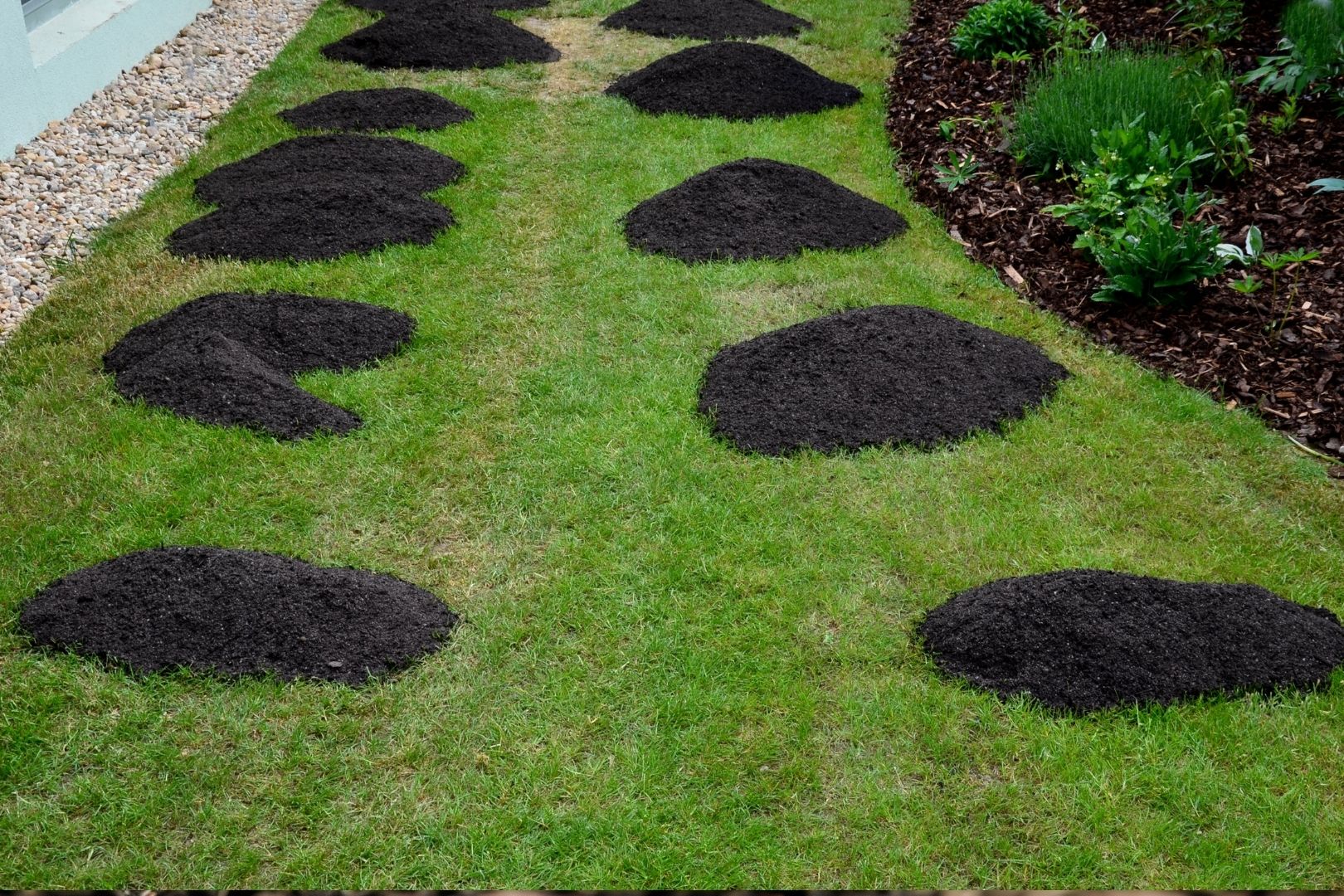
A light topdressing of compost, with A1 Organics’ COMAND® Compost, can significantly enhance soil moisture retention before irrigation systems are even turned on in the spring.
This isn’t just a soil amendment. It’s a water conservation strategy.
Looking Ahead
Water is just the beginning. Organic matter influences nearly every aspect of soil health and environmental performance.
In this 10-part Organic Matter Matters series, we’ll explore how compost-driven organic matter:
- Water Retention in Soil (this article)
- Soil Structure & Aggregation
- Microbial Life & Soil Biology
- Nutrient Cycling & Fertility
- Carbon Sequestration & Climate Impact
- Erosion Control & Stormwater Management
- Plant Health & Disease Suppression
- Root Development & Turf Performance
- Yield & Landscape Productivity
- Circular Economy & Waste Diversion
The Bottom Line
Healthy soils start with organic matter. And compost is the most effective, scalable, and natural way to build it.
In a water-limited environment like Colorado, the question isn’t whether we should use compost, it’s how quickly we can scale its use.
Organic Matter Matters.